

Does your dog suffer from reactivity, fearfulness, anxiety or aggressive behaviors?
Have you tried everything you can to think of to help your dog achieve a calm, neutral and stress free state of mind?
Are you ready to medicate, re-home or even consider behavioral euthanasia for your dog due to unsafe behavior?
Follow our behavior modification steps and see how much your relationship with your dog and their behavior changes.
These are the exact steps we use in a board and train to achieve a calm, neutral and safe dog that is reliable in all behaviors and easy to manage around triggers for reactivity, fearfulness, anxiety and aggression.
The Behavior Modification process is going to look similar for all dogs, but a good balanced trainer will tailor a training program to fit the unique needs of the specific dog they are working with.
Keep in mind that not all dogs learn or process information the same way, so this is a guideline to follow, and should not be used as a replacement for professional training.
We list these out as “steps”, however, most of these things are being done simultaneously by a professional trainer.
This is a simple visual chart that breaks down the behavior modification process.
Step 1: Teach Non- Compatible Behaviors: Sit, Down, Place, Come, Heel and Muzzle
- Build Hope for Behavior
- Build in the “You Must Do” Key
- Teach Marker Word System
Step 2: Change the Emotional State of Your Dog Through…
- Existential Feeding
- Counter Conditioning
- 3 D’s: Distance, Duration, Distraction
- Building Rapport and Structure
- Building Confidence
Step 3: Proof Behaviors
See trigger → Put dog into known behavior → Correct dog for breaking known behavior → Reward for compliance of known behavior → HARMONY!
This system of behavior modification only corrects a dog for breaking known behavior. This is the only fair way to correct your dog.
Step 1: Teach Non- Compatible Behaviors
These are your basic obedience commands: sit, down, place, come, heel and sometimes “muzzle”.
All of these behaviors are “not compatible” with barking, lunging, growling, pulling, biting.. etc.
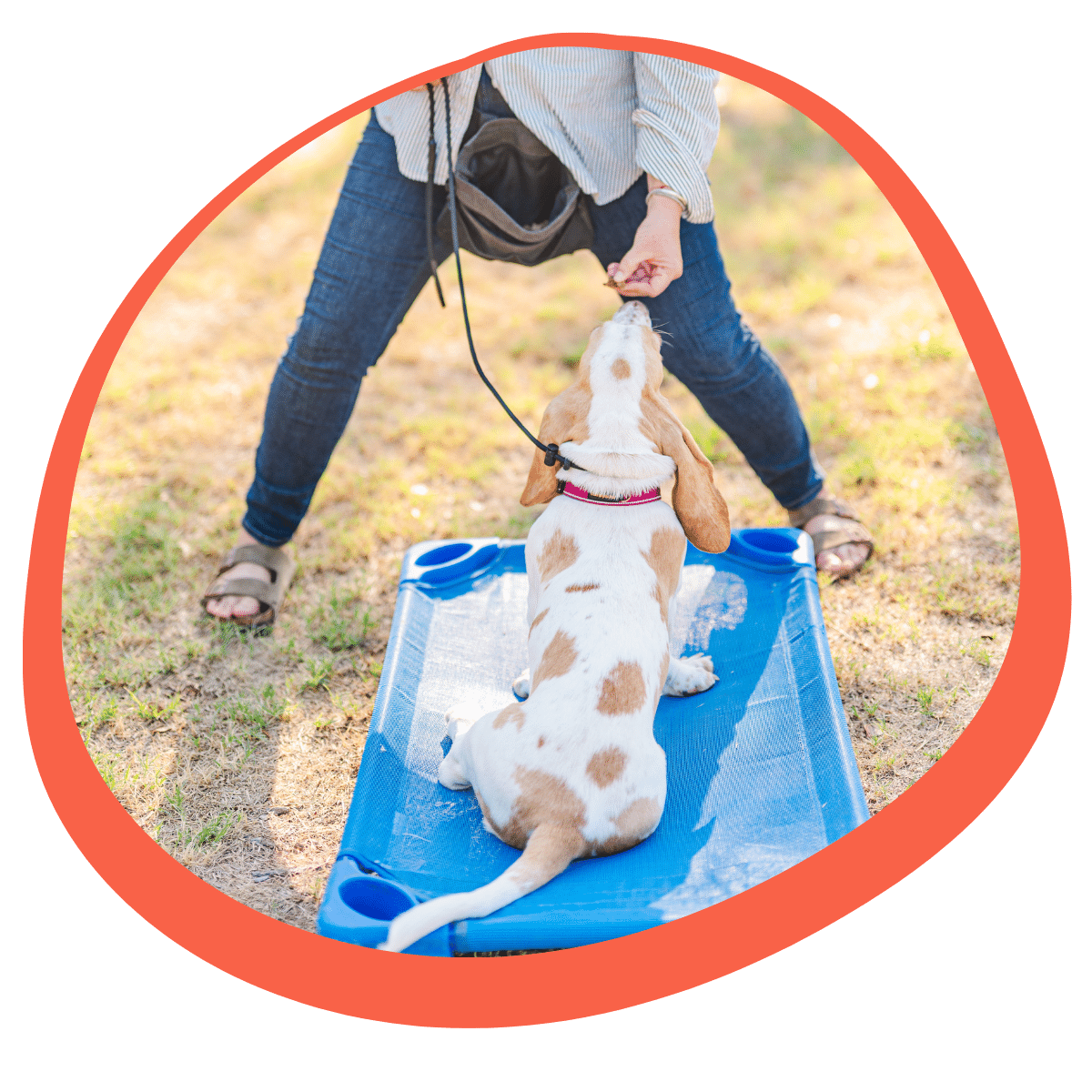
- These basic behaviors first must be taught away from the trigger for the behavior you are trying to modify (reactivity, fearfulness, anxiety or aggression).
- Build in a sense of hope for the behavior by rewarding your dog each time they do the behavior. Eventually, the reward you provide your dog must be more meaningful than the reward of practicing the undesired behavior. We will talk more about building food motivation later on in the existential feeding section.
- Build in your dogs “you must do this” key. If you do not have a reliable way of actually making your dog do the behaviors you want, you will never be able to hold them accountable for doing the behavior in front of the trigger for reactivity, fearfulness, anxiety or aggression.
- Eventually, we would layer in an e collar to replace the leash pressure to allow you to have both on and off leash control of your dog. We recommend hiring a professional trainer to teach you how to introduce e-collar pressure to your dog properly.
- Teach your dog how to follow leash pressure. We first teach dogs how to follow leash pressure utilizing a slip lead or prong collar to ensure we can safely and easily guide the dog into each behavior with directional pressure from a leash or collar, without a verbal command. This is key to having a clear and reliable communication system with your dog.
- The entire pressure - release system is reliant on how well you time adding and removing pressure and adding positive reinforcement after the behavior is achieved. We recommend hiring a professional trainer to teach you how to introduce leash pressure to your dog properly.
- Once your dog understands how to follow leash pressure, you can begin adding in verbal commands.
- Directional Pressure How To:
- Sit = upwards pressure on the leash
- Down = downwards pressure on the leash
- Come = pulling pressure on the leash toward yourself (reel in your dog like a fish)
- Place = lead your dog onto a place cot or dog bed using a leash in whatever direction needed
💡 PRO TIP: It is imperative that the pressure you add on the leash is released the moment your dog complies to the desired behavior. We typically pair leash pressure with a food lure in the beginning to help dogs figure out what direction they are supposed to move in.
- Teach Marker Word System. This is a system of communication that tells your dog what is happening next. These words should be used consistently after each command you give your dog as a way of reinforcing or correcting the behaviors and actions your dog performs.
- YES! = Marks initial compliance of behavior. Positive reinforcement always follows “Yes!”
- GOOD = Marks continued compliance of behavior. Positive reinforcement may or may not follow “good”.
- NO = Marks when your dog breaks a behavior before being told, or tells your dog to “try again” or “stop doing”. “No” should be paired with a correction back into the behavior you want your dog to be doing.
- BREAK = Terminal marker of behavior. Signals to your dog that they can “be a dog” and do as they please.
Step 2: Change The Emotional State Of Your Dog
This is the most challenging part of the behavior modification process. We are generally aiming to change a reactive, fearful, anxious or aggressive dog’s state of mind into a calm and neutral state of mind. The objective of behavior modification, when dealing with un-safe dog behavior, is not to achieve a social dog that can interact with other dogs or people, but a dog that can exist safely and calmly around triggers for those behaviors.
The following points will assist in changing the emotional state of your dog’s brain…
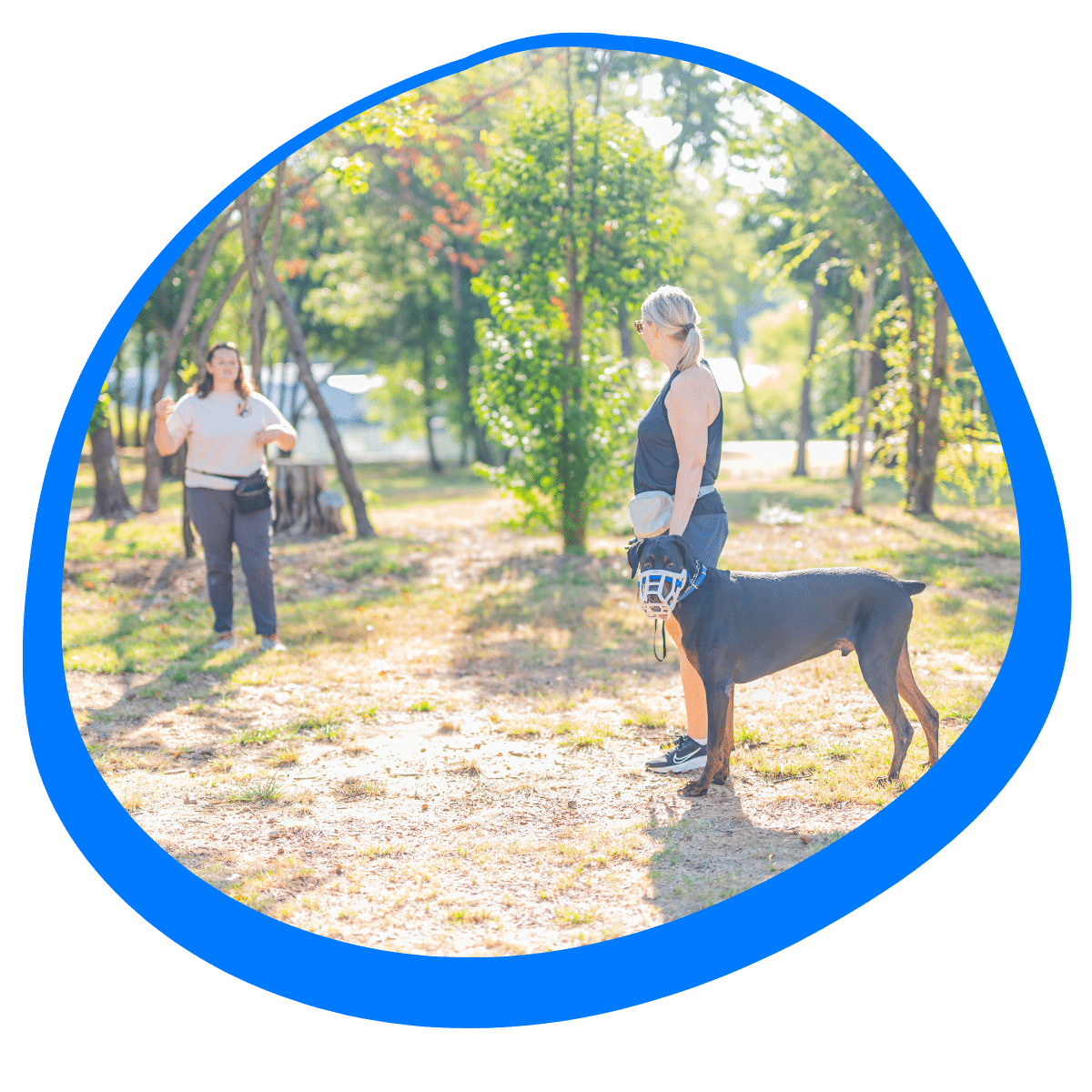
- Existential Feeding - this is a method of feeding in which your dog works for all the food they receive throughout the day. The dog will eat their meals from your hands as reward for the behaviors they do when you ask, or when you simply want to reinforce a behavior they do on their own.
- How to implement existential feeding
- Simply measure out your dog’s full ration of food for the day into a treat pouch and provide handfuls of food to them anytime they perform a behavior you want. Your dog should not be given any “free” food from a bowl. Following an existential feeding model when working on behavior modification teaches your dog very quickly that they must look to you for sustenance. If they do not follow your direction or practice good behavior, they do not eat. Yes, we are aware this is a controversial stance, but we utilize this method to ensure we have a way of motivating the dog we are working with on a regular basis.
- For Example: A dog that has been fed a bowl of food before a walk will most likely NOT take a handful of food from their handler when they see a dog or person that they want to bark and lunge at, whereas a dog that works for all of their food will likely engage with their handler when they see the dog or person because they know engagement is more beneficial than barking and lunging.
- Note: If your dog is used to getting meals from a bowl, they may refuse their normal food for a day or two when starting this feeding model before understanding their bowl will not be offered at the end of the day.
💡 PRO TIP: A healthy dog will not starve themselves. Wait your dog out and only feed by hand through training.
- Counter condition your dog's response to triggers for reactivity, fearfulness, anxiety or aggressive behaviors. Counter conditioning is the act of rewarding your dog for looking at or engaging with a trigger without reacting or practicing the undesired behavior. You have to start this process outside of your dog’s threshold for the undesired behavior (barking/ lunging/ growling/ biting.. etc).
- Example: Your normally reactive dog sees another dog 100 feet away and doesn’t react. This behavior should be heavily rewarded to teach the dog that looking at another dog calmly is more beneficial than reacting.
💡 PRO TIP: Counter conditioning only works when you are outside the threshold for your dog’s reaction to the trigger. If your dog won't take food from you or is still reacting negatively when they see the trigger, you are too close and should increase your threshold between your dog and the trigger.
- Incorporate the 3 D’s… Once your dog is reliable in all of their basic behaviors around normal “day to day” distractions, you have a built in “you must do this” key (aka leash pressure) and have a reliable feeding system (existential feeding), you can begin incorporating the 3 D’s into your training schedule.
- DISTANCE: slowly begin working to close the gap between your dog and their triggers. This is a slow and methodical process that cannot be rushed. If rushed, you will take steps backward in training and your relationship with your dog.
- DURATION: by increasing the time you expect your dog to be able to perform behaviors or be around their triggers, will help build impulse control and their ability to relax in more stressful situations long term. Make sure your dog can hold a position (like the place command) at home with a normal level of distraction before expecting duration in other behaviors in more distracting environments.
- DISTRACTION: by adding in more and more distraction to your dog’s training sessions, you are proofing behaviors, building impulse control and increasing your dog's ability to process information under more pressure. These are all things that will help you, as your dog's owner, figure out what your dog can and cannot handle. Not all dogs have the ability to do everything, and that is okay!
- Building Rapport and Structure with your dog is the most important step in rehabilitating a reactive, fearful, anxious or aggressive dog. When your dog knows exactly what they are supposed to do and when they are to do it, they will relax and allow you to lead. If your leadership lacks consistency, you will leave your dog guessing what you expect, which can stress and anxiety and force your dog to choose unsafe behavior out of defense to protect themselves. Providing your dog with consistent and clear input will ensure they know what to do and when to do it. This will lead to a more harmonious relationship where the dog and owner are working together instead of against the other.
- Structure and rapport starts at home. Incorporating rules and boundaries in your dog’s home environment will set your dog up for success in new environments. We cannot expect a dog to live at home with no rules or boundaries and then listen to everything we ask of them in public. Incorporate crate time, place time and structured obedience sessions into your daily life at home, if you want to see progress in public spaces where triggers for reactivity, fear, anxiety or aggression may be present.
💡 PRO TIP: During the behavior modification process, it is extremely important to ensure your dog doesn’t have the opportunity to practice undesirable behaviors. This can be challenging in their normal home environment, which is why most behavior modification cases are dealt with in a board and train environment with a professional trainer handling the dog 24/7. Once a dog reinforces an undesired behavior, the dog will always see that behavior as an option.
- For Example: If a dog has a bite history and has seen that biting gets them what they want (usually space from whatever they bite) the dog sees that biting is always an option, regardless of training. This is why proper management and the structure and rapport you build with your dog is so important.
- Building Confidence in obedience behaviors will naturally increase your dog’s general confidence in day to day life. When you provide consistent and clear leadership to your dog, you will see a decrease in reactivity, fear and aggressive responses to triggers because your dog understands what benefits them. Dog’s only do what they do for two reasons: to avoid something unpleasant or to better their own situation.
Step 3: Proof Behaviors
This is where all your hard work pays off, or you see where cracks in your dog’s foundation are. Now that you have a reliable communication system in place, you can rely on your dog’s behaviors and begin expecting more of them in front of triggers.
If you follow the behavior modification process as laid out here, your dog will learn how to control their negative impulses, have a better relationship with you as their handler and work toward achieving a calm, healthy state of mind.

- Proofing behavior is simple:
- Allow your dog to see the trigger
- Immediately put your dog into a known behavior (incompatible behavior)
- Correct your dog if it breaks the known behavior using your “you must do this” key (pressure)
- Reward your dog for the known behavior
- HARMONY is achieved!
If you are constantly correcting your dog, you need to go back to basics and continue practicing steps 1 and 2 to fix the cracks in your foundation.
-
Side Note: When dealing with unsafe dog behaviors, it is extremely important to understand and accept that your dog may have limitations in what activities they can participate in. Avoid situations that your dog is not equipped to handle to ensure a positive experience for your dog.
💡 PRO TIP: We always recommend consulting with a professional balanced dog trainer when dealing with reactivity, fearfulness, anxiety and aggression to ensure you are following the behavior modification process correctly and introducing the necessary tools and communication systems properly and safely. This guide is meant to provide you with an outline of how the behavior modification process works and is not meant to replace the guidance a professional balanced trainer provides.